Extreme Hunger Explained: The Biology of Recovery
Jan 24, 2026Extreme hunger is a biological drive toward repair. When it appears in eating disorder recovery, it signals a body reclaiming safety, energy, and trust. This experience carries urgency, clarity, and persistence because biology designed it that way.
This article explains the science in clear, human language. You will learn what extreme hunger is, why it emerges, how the brain and hormones coordinate it, and what allows it to settle.
What “Extreme Hunger” Actually Describes
People use the phrase extreme hunger to describe a cluster of experiences that arrive together:
-
Strong physical hunger that returns quickly
-
Powerful mental focus on food and eating
-
Clear preferences for energy-dense foods
-
A sense of urgency that feels unfamiliar
These signals often surprise people because they feel different from everyday appetite. Biology calls this recovery hunger. It carries a mission.

The Body’s Prime Directive: Restore Safety
Human physiology evolved to survive scarcity. When energy intake falls below needs for long enough, the body switches priorities.
Several systems shift together:
-
Energy conservation increases
-
Hormones amplify hunger signals
-
The brain narrows attention toward food
-
Emotional intensity rises to support action
These changes protect life. They also persist until the system receives enough energy to feel safe again.
Research led by Ancel Keys demonstrated this clearly. During controlled semi-starvation, healthy men developed constant food thoughts, strong hunger, mood changes, and altered eating behaviour. During refeeding, hunger surged and weight continued restoring beyond early expectations before stabilising.
That same biological arc explains recovery today.

The Hormones Behind the Drive
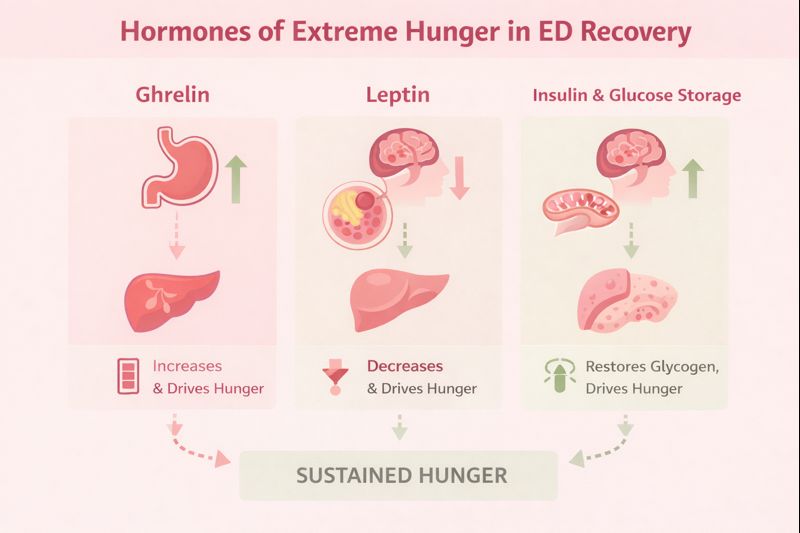
Extreme hunger reflects coordinated hormone activity. Three messengers lead the process.
Ghrelin: The Initiator
Ghrelin rises during energy deficit and signals the brain to seek food. After prolonged restriction, ghrelin remains elevated, keeping hunger present until energy availability feels reliable again.
Leptin: The Safety Gauge
Leptin reflects energy stores. During restriction, leptin falls. Low leptin signals the need to rebuild reserves. Hunger persists until leptin rises into a range that communicates safety.
Insulin and Glucose Regulation
Refeeding restores glycogen in liver and muscle. This process requires sustained energy intake. Appetite remains high while repair continues.
The Brain’s Role: Focus as a Survival Tool
The brain actively supports extreme hunger. During energy deficit, it reallocates resources.
This includes:
-
Increased salience of food cues
-
Reduced cognitive flexibility
-
Heightened reward response to eating
Attention follows survival priorities. As nourishment continues, the brain regains flexibility and food occupies less mental space.

Why Hunger Targets Certain Foods
Extreme hunger often directs attention toward foods that deliver energy efficiently.
Energy-dense foods provide:
-
Rapid glucose availability
-
Efficient glycogen replenishment
-
Hormone production support
-
Fuel for tissue repair
This preference reflects metabolic logic. As stores replenish and safety increases, preferences broaden naturally.
Why Extreme Hunger Can Feel Emotional
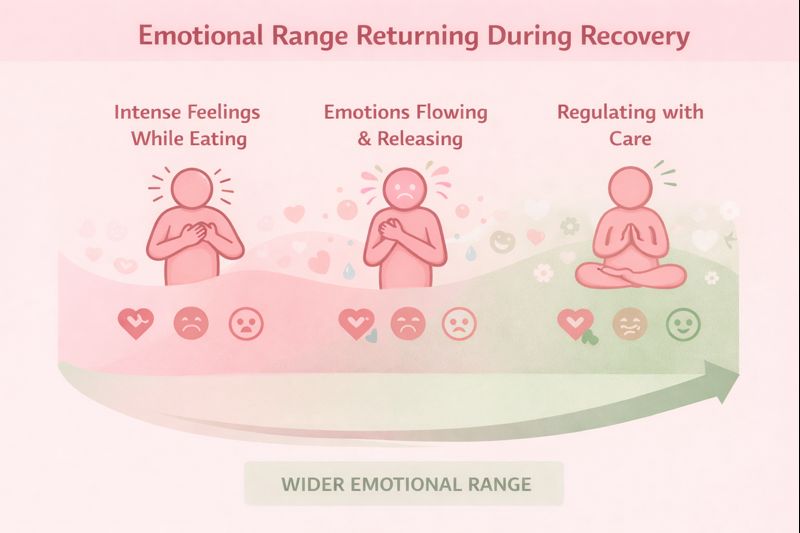
Hunger and emotion share neural pathways. As energy availability increases, emotional range expands.
This phase may include:
-
Heightened feelings during eating
-
Emotional release
-
Sensitivity and vulnerability
Energy allows access to emotion. Regulation improves as nourishment continues.
The Natural Resolution Curve
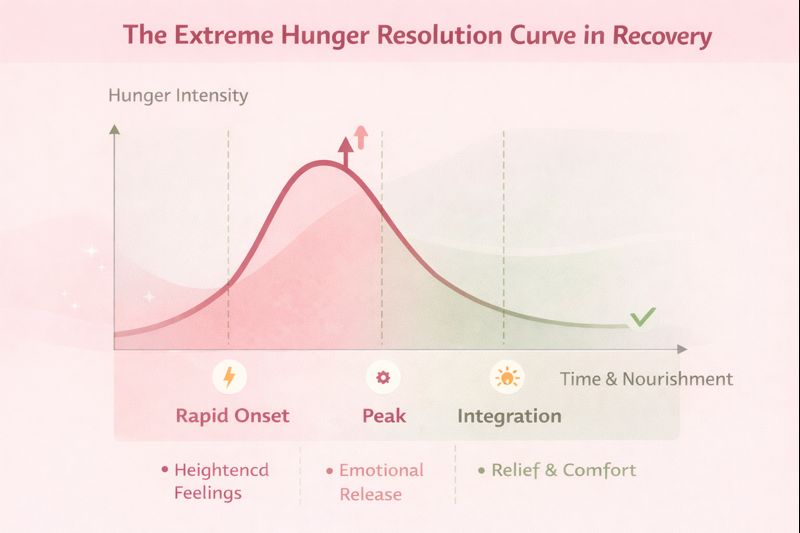
Extreme hunger follows a predictable trajectory when recovery proceeds consistently.
Common phases include:
-
Onset
-
Peak
-
Integration
-
Stability
Consistency shapes the curve. Regular nourishment communicates reliability. The system responds by easing urgency.
What Helps the Process Complete
Trust builds through repeated signals of safety:
-
Adequate energy intake
-
Permission to respond to hunger
-
Reduced compensatory behaviours
-
Supportive rest
The body responds by restoring regulation.
Where This Leaves You
Extreme hunger marks a body actively repairing itself. It reflects intelligence returning, safety rebuilding, and trust being restored at a physiological level. When hunger rises, it signals that recovery is underway, not unraveling. With consistent nourishment and permission to respond, the system settles. Hunger softens, thoughts widen, and life gradually moves back into focus. The body knows how to complete this process. Recovery progresses when you allow it to finish.