Recovery is built in the ordinary days.
This is for those.
The moments between sessions, calls, and breakthroughs — that's where recovery is actually made or lost. The Recovery Companion is there for all of them.
Built by Julia Trehane — recovery coach, podcast host, and someone who lived with an eating disorder for 40 years before finding full freedom.
Knowing what to do isn’t the hard part.
"Recovery isn't built in one breakthrough moment. It's built in what you do — on a Tuesday, when no one's watching, and the thoughts are loud."
You may already understand a lot about your eating disorder. You may have read the books, listened to the podcasts, maybe worked with a therapist or coach.
But when it's time to eat — and the thoughts start negotiating — all of that can disappear.
That's not failure. That's the gap between understanding recovery and living it, day after day. The Recovery Companion is built for that gap.
What The App Does
Support that stays with you through the day
Not just when you feel motivated. Not just when things are manageable. Across all of it — the easy moments and the hard ones.
01
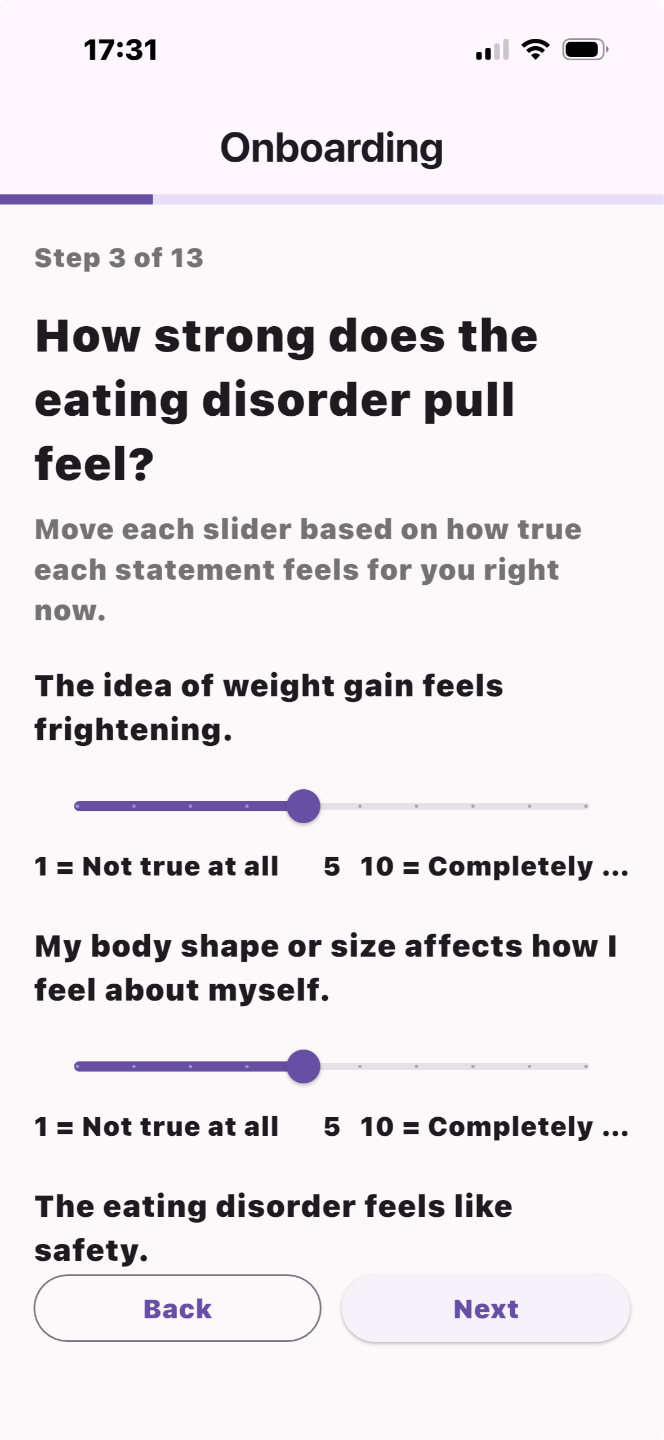
It starts by understanding you
The app learns what you're dealing with — your patterns, your struggles, where things tend to get hard. So what you receive isn't generic. It's shaped around how your recovery actually feels.
02
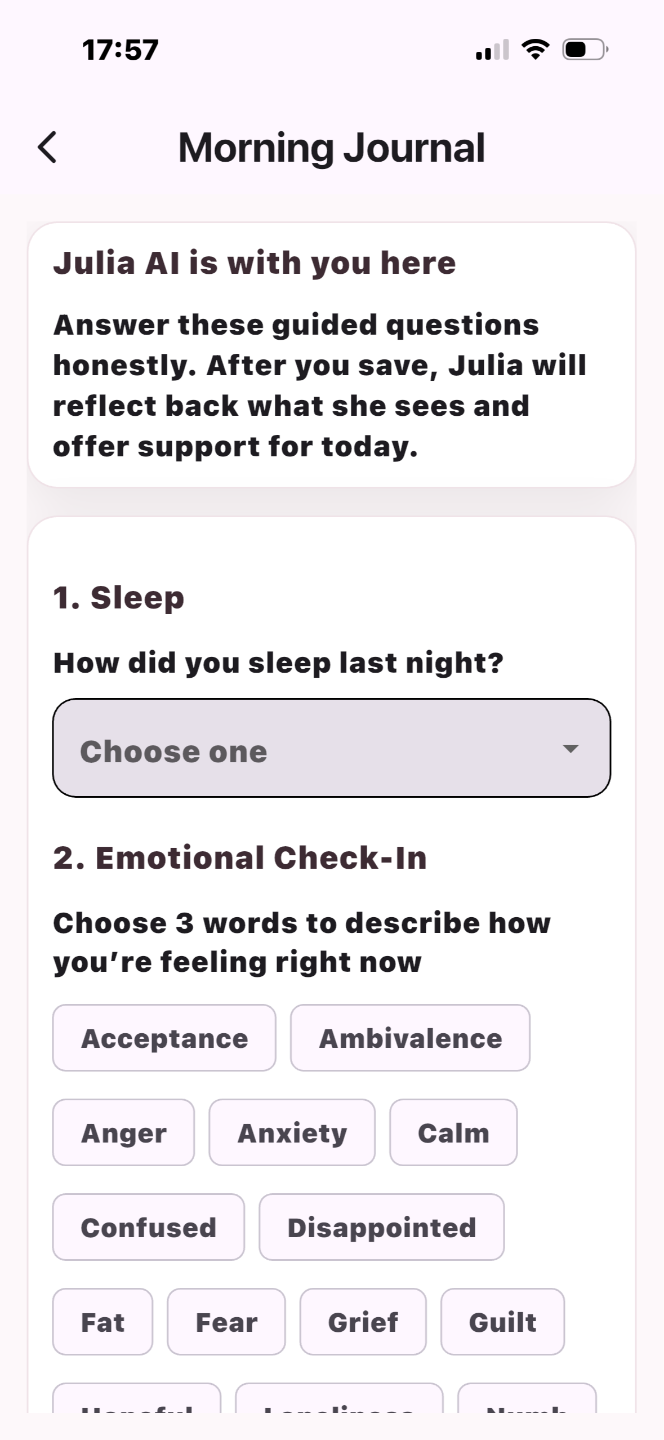
Start every day with a check-in, not avoidance
Each morning, you reflect on how you're feeling and what your day holds. The app responds with clear, grounded guidance — so you're not going in blind or letting the disorder set the tone before you do.
03
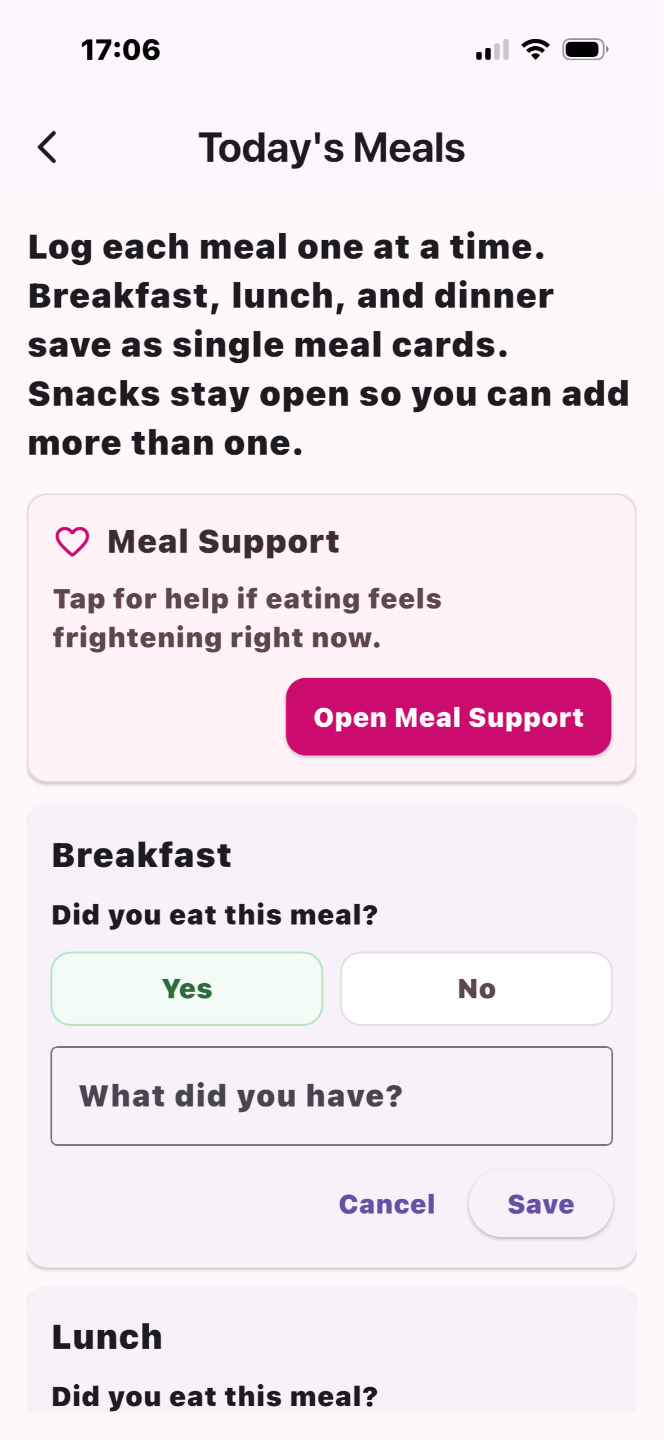
Support when meals feel hard
You're reminded to eat consistently, so meals don't drift or quietly disappear from your day. And when particular foods feel difficult, the app is there — not to push, but to help you move through it.
04
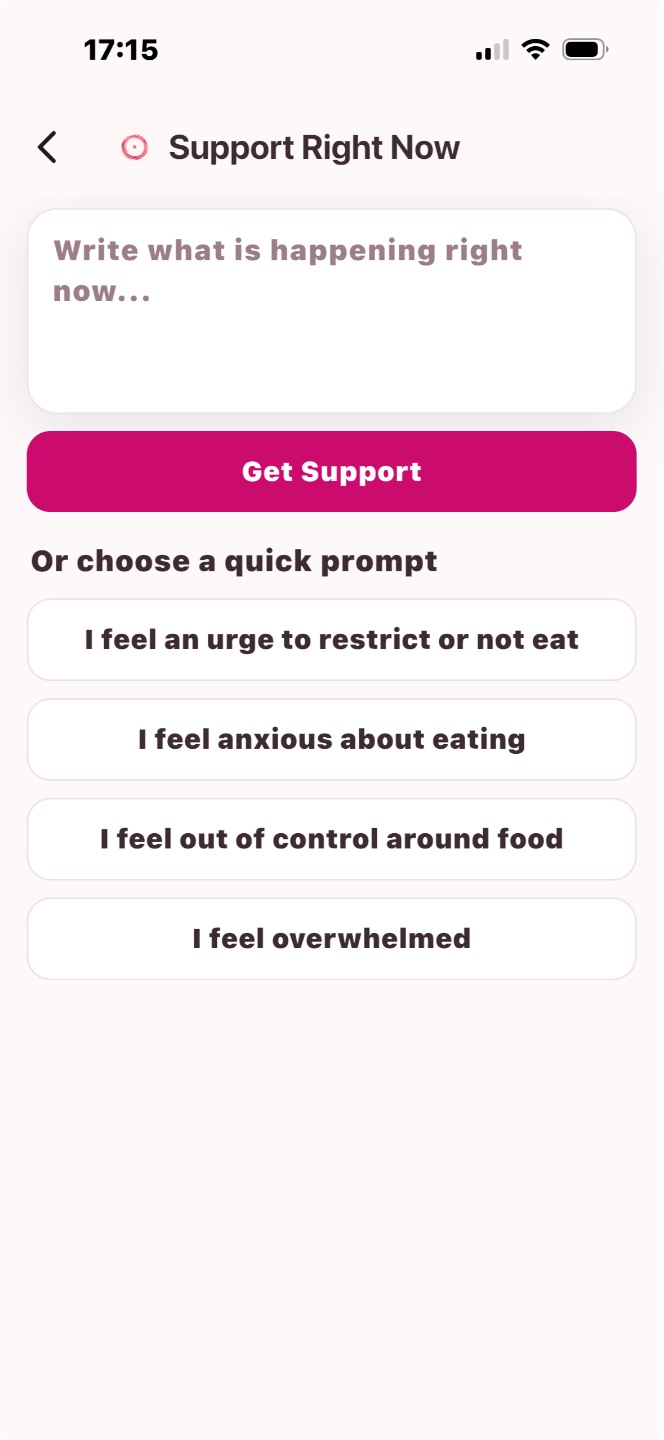
Guidance that thinks like a recovery coach
This isn't a generic chatbot. The in-app support is built directly from Julia's approach — how she thinks, how she responds, how she helps people through the moments they'd usually get stuck. Her method, available throughout your day.
05
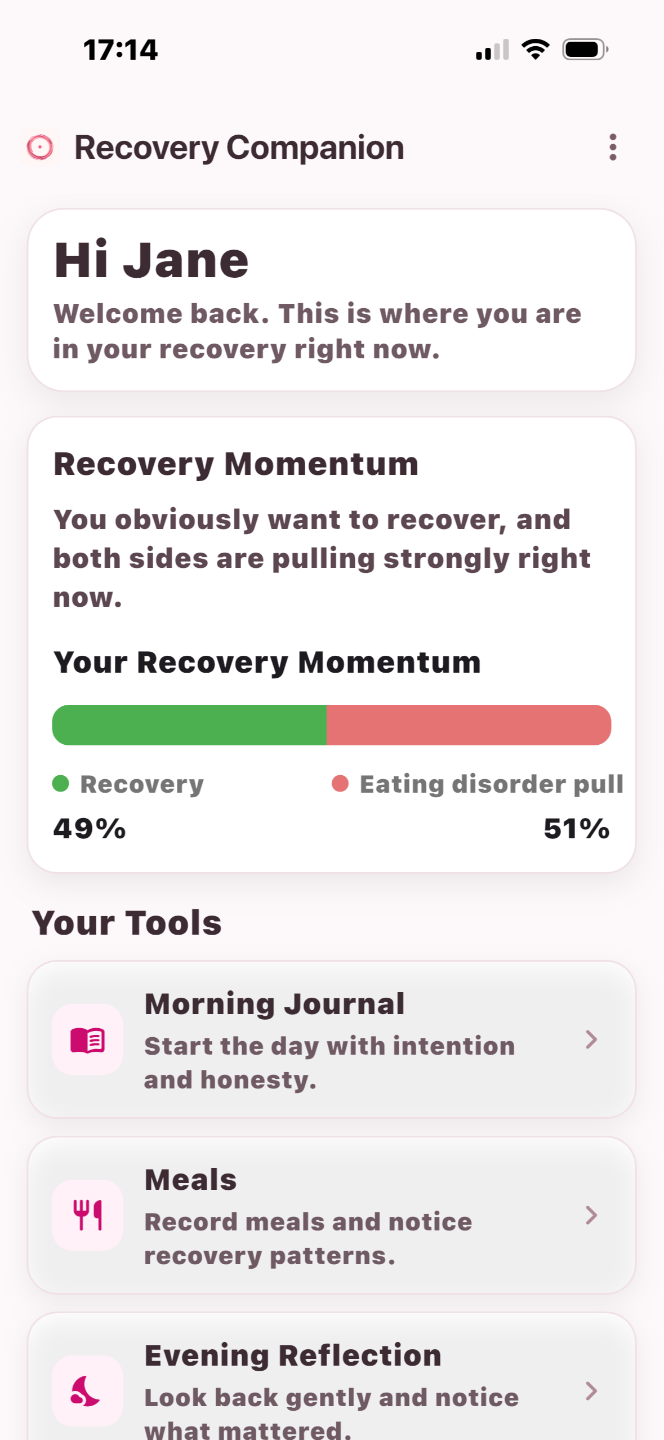
See yourself moving forward
Recovery can feel invisible when you're inside it. The app shows you how your actions are shifting things — so instead of guessing, you have something real to look at. And something to keep building on.
06
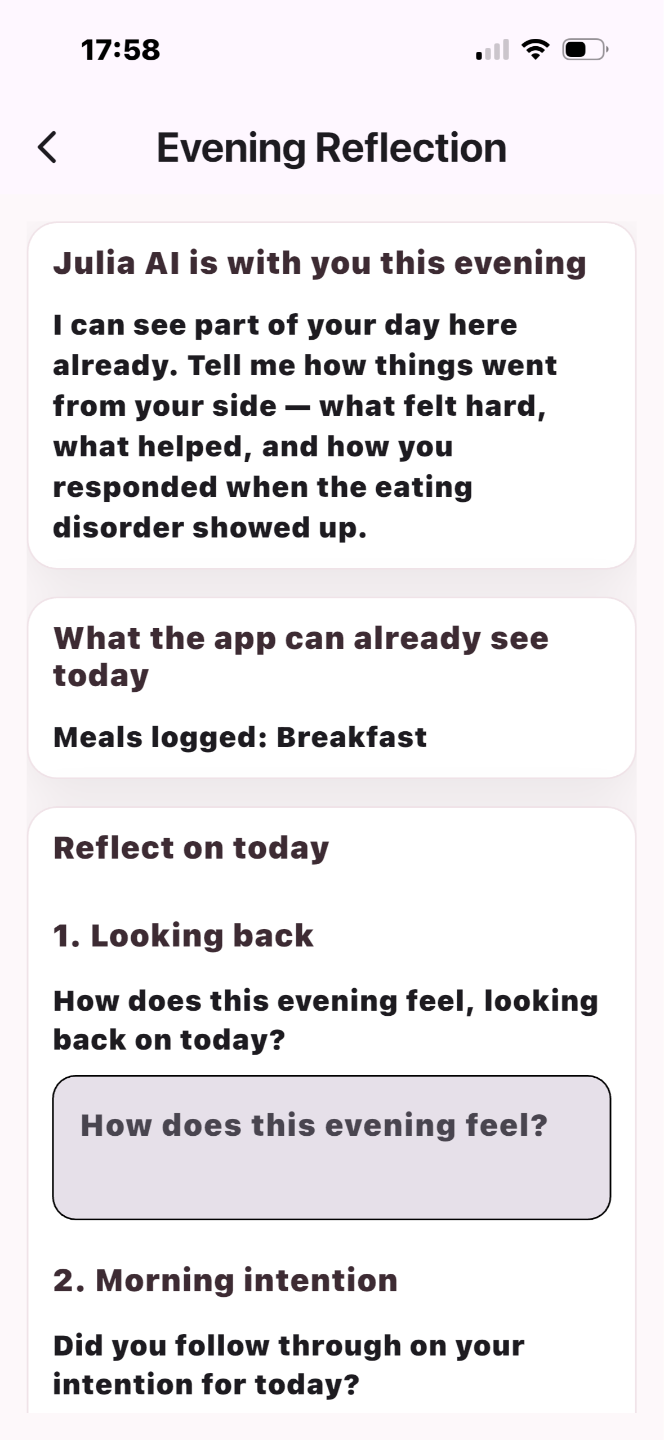
End the day without losing it
An evening reflection helps you look back honestly — without turning it into self-criticism. You see what you followed through on, where it was hard, and what to carry into tomorrow. Even an imperfect day isn't a lost one.
Why this is different
This doesn't ask you to be perfect.
It asks you to keep going.
"Even if the day wasn't what you hoped — you don't lose it. You reset, and recovery keeps moving."
Most people don't struggle because they don't understand recovery. They struggle because in the moment, something else takes over. This is built to be there in exactly those moments — not to judge how it went, but to help you move through it.
This works when you keep showing up
You don’t need a perfect start.
You need something you’ll come back to — every day.
Because recovery isn’t built in one moment.
It’s built in the small decisions you follow through on — again and again.